
Dental House_logo

Mail Us

thedentalhousebangalore@gmail.com

Call Us

+91-9900087387

Dental Bridges: Types, Procedure, Benefits, and Aftercare Explained

What Are Dental Bridges?

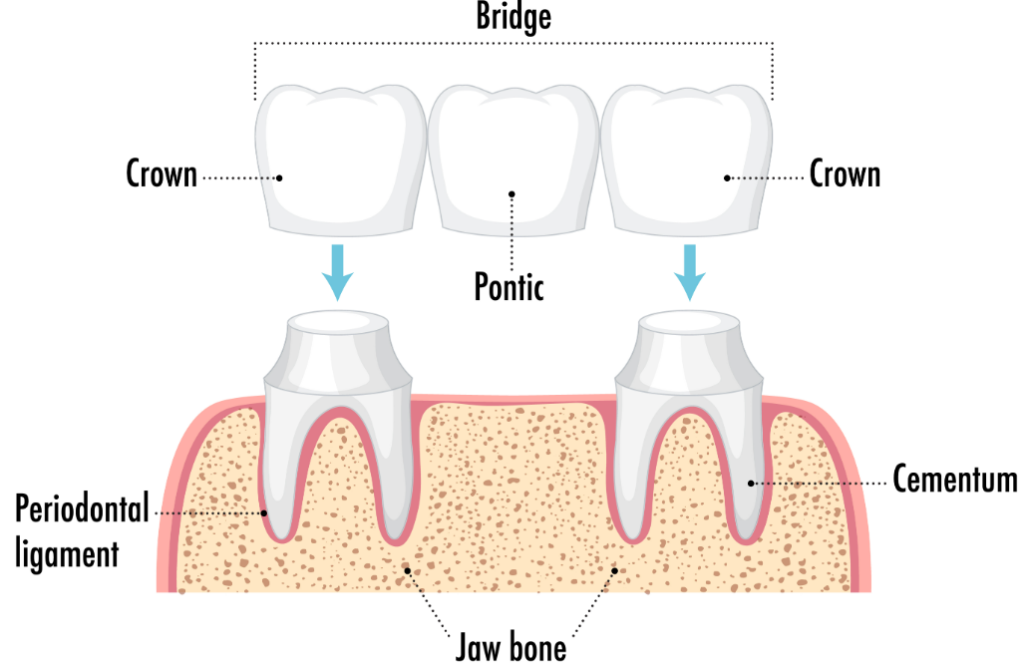
Dental bridges are a common way to replace missing teeth. They fill the gap where one or more teeth are lost. Usually, a dental bridge uses the teeth on either side of the gap for support. As a result, you can chew, speak, and smile with confidence. According to the American Dental Association (ADA), dental bridges help keep your mouth healthy and your bite even.

Types of Dental Bridges

There are several types of dental bridges. Each type fits different needs. Knowing the types of dental bridges can help you choose the best one for you. Here are the main options:

  • Traditional Bridge: This is the most common type. It uses crowns on the teeth next to the gap.
  • Cantilever Bridge: This bridge uses only one tooth for support. It is used when there is only one natural tooth next to the gap.
  • Maryland Bridge: This type uses a metal or porcelain frame. The frame is bonded to the back of the nearby teeth.
  • Implant-Supported Bridge: This bridge uses dental implants instead of natural teeth for support.
  • Each type of dental bridge has its own benefits and uses. Your dentist will help you decide which is best.

    Who Needs a Dental Bridge?

    Many people can benefit from a dental bridge. If you have lost one or more teeth, you may be a good candidate. For example, a dental bridge can help if:

  • You have gaps from missing teeth
  • Your bite feels uneven
  • You have trouble chewing or speaking
  • Your remaining teeth are shifting out of place
  • However, not everyone is a candidate. Your dentist will check your gums and nearby teeth first. Healthy teeth and gums are important for a successful dental bridge.

    Dental Bridge Procedure: Step-by-Step

    The dental bridge procedure usually takes two or more visits. Here is what you can expect:

  • First Visit: Your dentist will examine your mouth. Then, they will prepare the teeth next to the gap. These teeth may be shaped to fit crowns.
  • Impressions: Next, your dentist will take an impression of your teeth. This helps make a custom bridge that fits well.
  • Temporary Bridge: While your permanent bridge is made, you may get a temporary one. This protects your teeth and gums.
  • Second Visit: Your dentist will remove the temporary bridge. Then, they will fit and adjust the new dental bridge. If it fits well, the bridge is cemented in place.
  • Sometimes, more visits are needed for adjustments. Your dentist will make sure your dental bridge feels comfortable and works well.

    Benefits of Dental Bridges

    Dental bridges offer many benefits. For instance, they can:

  • Restore your smile and confidence
  • Help you chew and speak better
  • Keep your bite even and natural
  • Prevent other teeth from shifting
  • Support the shape of your face
  • According to the ADA, dental bridges can last many years with good care. Therefore, they are a reliable choice for many people.

    Risks and Considerations

    While dental bridges are safe, there are some risks. For example, the teeth that support the bridge may become sensitive. In rare cases, they may get damaged or decay. Also, a dental bridge may not last as long if you do not care for it well. However, regular dental visits can help catch problems early. Your dentist will discuss all risks before starting the dental bridge procedure.

    Dental Bridge Aftercare Tips

    Proper aftercare helps your dental bridge last longer. Here are some tips to follow:

  • Brush your teeth twice a day with a soft toothbrush
  • Floss daily, especially under the bridge
  • Use a special floss threader or water flosser for hard-to-reach areas
  • Visit your dentist for regular check-ups and cleanings
  • Avoid very hard or sticky foods that may damage the bridge
  • With good care, your dental bridge can last many years. Your dentist can show you the best way to clean around your bridge.

    Frequently Asked Questions About Dental Bridges

  • How long do dental bridges last?
  • With proper care, dental bridges can last 5 to 15 years or more.
  • Does getting a dental bridge hurt?
  • Most people feel little pain. Your dentist will use local anesthesia to keep you comfortable.
  • Can I eat normally with a dental bridge?
  • Yes, but it is best to avoid very hard or sticky foods.
  • How do I clean my dental bridge?
  • Brush and floss daily. Use special tools if needed to clean under the bridge.
  • Are dental bridges covered by insurance?
  • Many dental plans cover part of the cost. Check with your provider for details.
  • For more information, visit trusted sources like the American Dental Association or the World Health Organization.

    Consult a qualified dentist to find out if a dental bridge is right for you.