Introduction
Tooth decay is a common dental problem that affects people of all ages. In fact, tooth decay happens when the hard surface of your tooth breaks down. This process can lead to pain, cavities, and even tooth loss if not treated early. However, you can prevent serious damage by understanding the signs and causes of tooth decay. Early action helps protect your dental health and keeps your smile bright.
What Is Tooth Decay?
Tooth decay, also called dental caries or cavities, is the destruction of your tooth’s outer layer. This layer is known as enamel. When bacteria in your mouth feed on sugars, they make acids. These acids slowly eat away at the enamel. Over time, this creates holes or cavities in your teeth. If left untreated, tooth decay can reach deeper layers and cause more harm.
Early Signs and Symptoms
Spotting tooth decay early can stop it from getting worse. Look for these signs:
Sometimes, you may not feel any pain at first. Therefore, regular dental checkups are important for early detection.
Causes and Risk Factors
Many things can lead to tooth decay. For example, eating sugary foods and drinks often increases your risk. Bacteria in your mouth turn sugar into acid, which damages teeth. Poor oral hygiene, such as not brushing or flossing daily, also plays a big role. Other risk factors include:
Because these factors add up, it is important to take care of your teeth every day.
How Tooth Decay Progresses
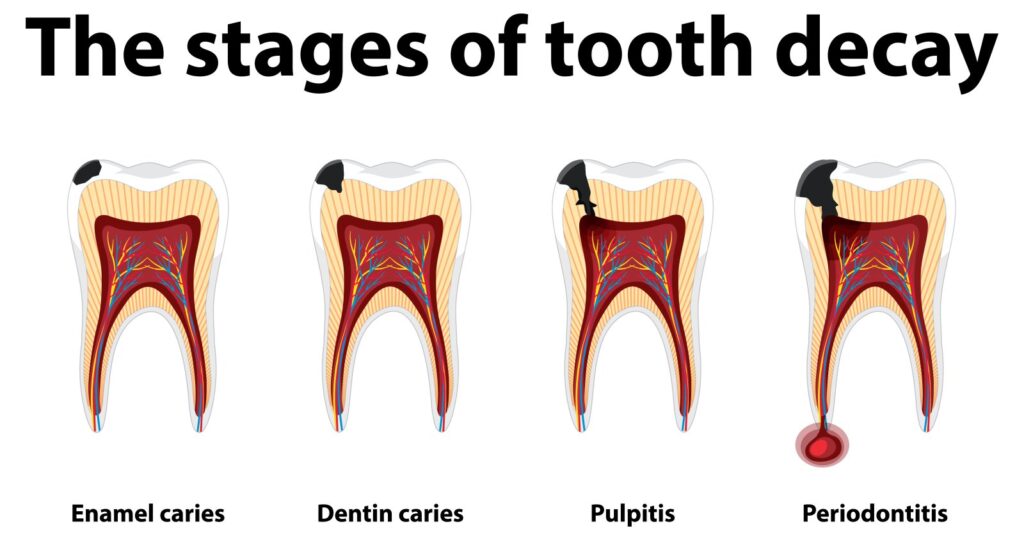
Tooth decay does not happen overnight. First, acids weaken the enamel. Next, small spots or holes form. If you do not treat these early, the decay can reach the softer layer under the enamel, called dentin. After that, the damage may spread to the pulp, where nerves and blood vessels live. This can cause pain, infection, and even tooth loss. Therefore, acting early is key to stopping further harm.
Diagnosis and When to See a Dentist
It is best to see a dentist if you notice any signs of tooth decay. Dentists use special tools and X-rays to check for cavities. Sometimes, they can spot problems before you feel pain. Early diagnosis means easier and less costly treatment. If you have tooth pain, sensitivity, or visible spots, make an appointment soon. Regular dental visits every six months help catch problems early.
Treatment Options
Treatment depends on how far the decay has gone. For early decay, your dentist may suggest fluoride treatments. These can help repair weak enamel. If you have a cavity, the dentist will remove the decayed part and fill the hole. For deeper decay, you might need:
Because early treatment is simpler, do not wait if you notice symptoms.
Prevention Tips and Daily Care
Good oral hygiene is the best way to prevent tooth decay. Try these tips every day:
In addition, using mouthwash and eating a balanced diet can help keep your teeth strong.
When Damage Gets Worse: What to Watch For
If tooth decay is not treated, it can get much worse. Watch for these warning signs:
Because these signs may mean a serious infection, seek dental care right away. Quick action can prevent bigger problems and protect your health.
Conclusion
Tooth decay can be stopped if you act early. Therefore, watch for signs, practice good oral hygiene, and visit your dentist often. Consult a dentist promptly if you notice any signs of tooth decay for personalized care and prevention.